Describe the Lytic and Lysogenic Cycle of Bacteriophage
Choose the term that describes a bacteriophage infection in which the bacteriophage DNA is inserted into the host cell DNA as a prophage and the infected bacteria can continue to grow and divide. In the lytic cycle the phage replicates and lyses the host cell.

Lytic Vs Lysogenic Understanding Bacteriophage Life Cycles Technology Networks
Before we get to the nitty-gritty of this lesson Id like to point something out.
. There are five stages. In the lytic cycle the phage replicates and lyses the host cell. - The lysogenic cycle is the other cycle of viral reproduction It is characterized by the integration of the bacteriophage nucleic.
Lytic versus lysogenic cycle. Definition Location Purpose 420 Aquaporins. Sometimes however a virus can remain within the cell without being released.
During the lytic cycle of virulent phage the bacteriophage takes over the cell reproduces new phages and destroys the cell. - a lytic cycle the viral DNA exists as a separate molecule in the bacterial cell and reproduce. Latency is a defining element of the lysogenic form of viral replication.
Academiaedu is a platform for academics to share research papers. Lytic versus lysogenic cycle. - The difference between the lytic and lysogenic cycle is that.
Live virus reference strain LVRS lysogenic cycle lytic cycle M maturation molecular virology. - Lysogenic cycles can also occur in eukaryotes. A temperate bacteriophage has both lytic and lysogenic cycles.
In the lysogenic cycle phage DNA is incorporated into the host genome where it is passed on to subsequent generations. For example when a temperate bacteriophage infects a bacterial cell it replicates by means of a lysogenic cycle Figure 3 and the viral genome is. Bacteriophage Lytic and Lysogenic Cycles 712 Spindle Fibers.
There are five stages. Environmental stressors such as starvation or exposure to toxic. A Temperate b Persistent infection c.
T-even phage is a good example of a well-characterized class of virulent phages. In the lysogenic cycle phage DNA is incorporated into the host genome where it is passed on to subsequent generations. Under certain conditions lysogenic phages can be induced to follow a lytic cycle.
Generalized Transduction by Lytic Bacteriophage Plasmids such as the penicillinase plasmid of Staphylococcus aureus may also be carried from one bacterium to another by generalized transduction. Other life cycles including pseudolysogeny and chronic infection also exist. Lysogenic phages incorporate their nucleic acid into the chromosome of the host cell and replicate with it as a unit without destroying the cell.
During the lytic cycle of virulent phage the bacteriophage takes over the cell reproduces new phages and destroys the cell. A temperate bacteriophage has both lytic and lysogenic cycles. In pseudolysogeny a bacteriophage.
T-even phage is a good example of a well-characterized class of virulent phages. An example of a lytic bacteriophage is T4 which infects Escherichia coli found in the human intestinal tract. Which of the following is used to describe the phage DNA that is latently incorporated into the bacterial host genome.
This may occur occasionally during the lysogenic life cycle of a temperate bacteriophage. Definition Function 618. Helical Icosahedral and Prolate Viral Shapes.
The latent period ends when the virus reactivates and begins producing large amounts of viral progeny without the host cell being infected by additional external virions.
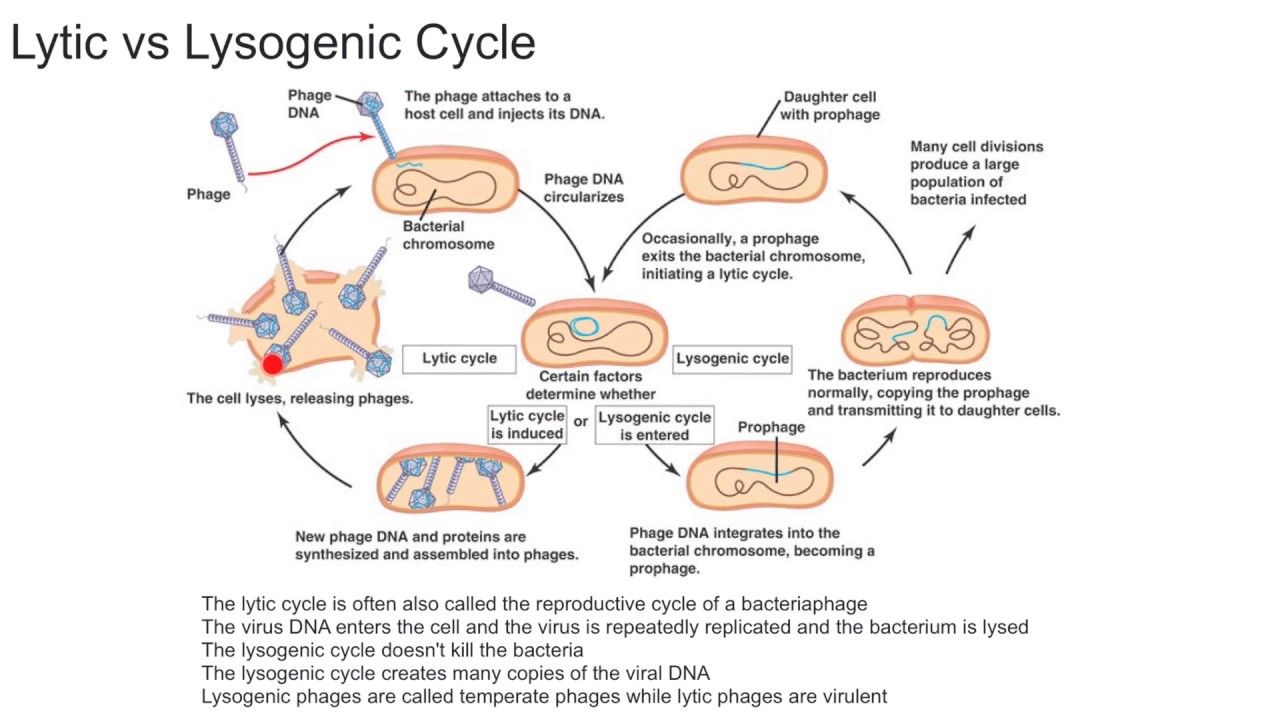
Lytic Vs Lysogenic Cycle Youtube

Lytic Vs Lysogenic Understanding Bacteriophage Life Cycles Technology Networks
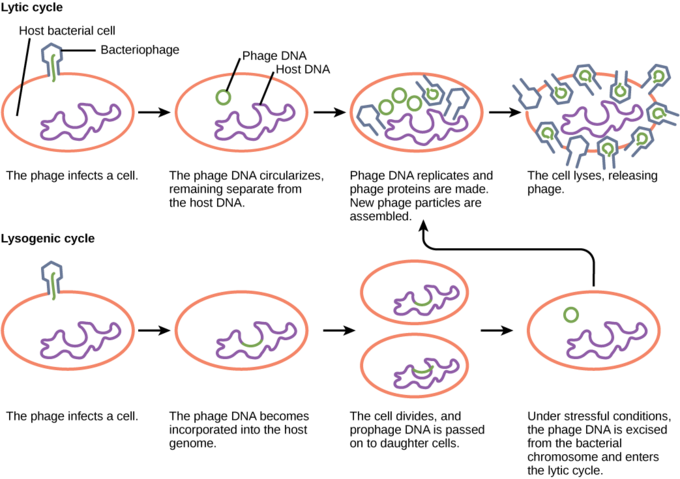
21 2b The Lytic And Lysogenic Cycles Of Bacteriophages Biology Libretexts
0 Response to "Describe the Lytic and Lysogenic Cycle of Bacteriophage"
Post a Comment